THE ESSENTIALS
- Cotton describes a fibre; percale and sateen describe woven fabric constructions.
- Thread count alone cannot establish how bedding will feel or perform.
- Compare finished sizes, fabric weight, details and laundering results using the same sample criteria.
Fibre composition comes before weave
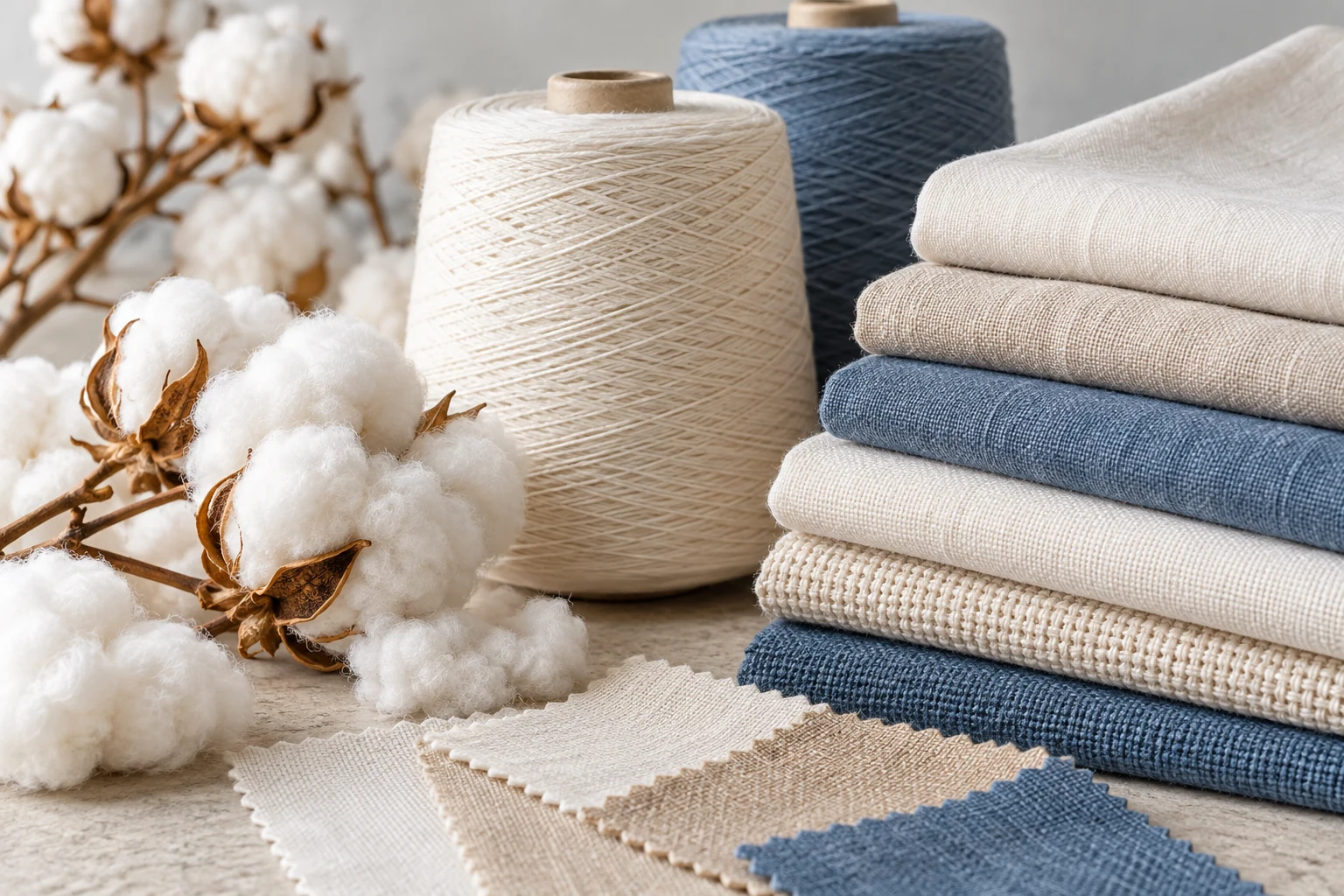
Fibre composition identifies the material used in the fabric—such as cotton, a cotton-rich blend or another clearly declared fibre. Weave describes how the lengthwise warp and crosswise weft yarns interlace. These are different decisions, and both belong on a sourcing specification.
Two products made from cotton can differ substantially because of yarn characteristics, construction, fabric mass, finishing and laundering. Request composition percentages rather than relying on general terms such as “natural” or “premium”.
- State the declared fibre composition and percentages.
- Record yarn and construction requirements when important to the buyer.
- Specify any relevant certifications only when valid documentation can be supplied.
Percale vs sateen: the practical differences
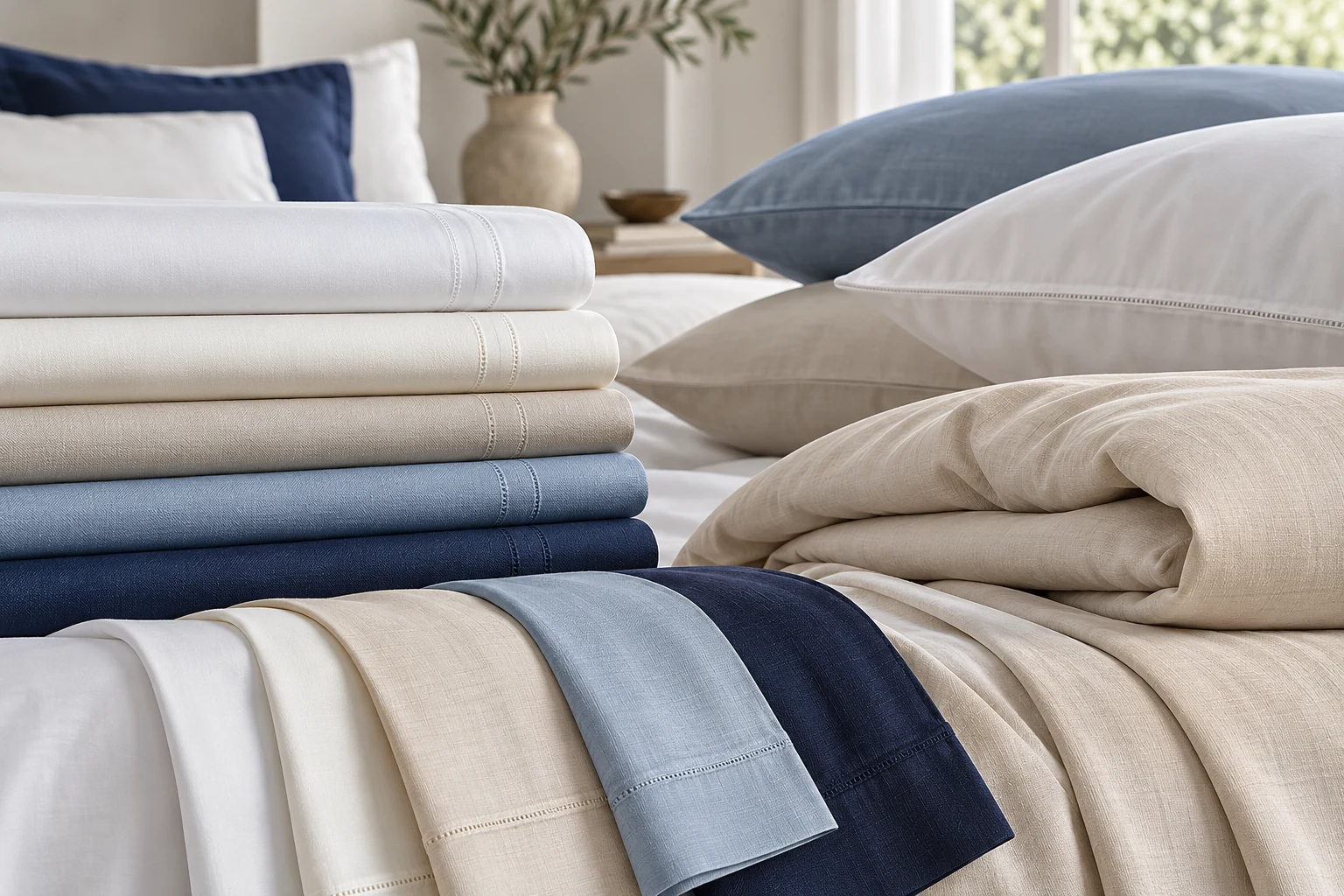
Percale is typically a balanced plain weave with frequent yarn interlacings. It often gives bedding a matte appearance and a crisp, structured hand. The actual result still depends on yarn choice, density and finishing.
Sateen has a different interlacing pattern, with longer yarn floats appearing at the fabric surface. This often creates a smoother, more lustrous face and fluid drape, but the result varies between specifications. Neither is an automatic quality grade.
| Evaluation point | Percale | Sateen |
|---|---|---|
| Typical construction | Plain weave with frequent interlacings | Sateen weave with longer surface floats |
| Common visual character | Matte, structured appearance | Softer sheen and smoother surface |
| Common feel | Crisp hand; varies with finishing | Smooth hand and flexible drape; varies by style |
| Buyer comparison | Verify weight, fibre, finish and wash behavior | Verify weight, fibre, finish and wash behavior |
These are general construction tendencies, not guaranteed product performance statements.
Beyond basic weaves: dobby, jacquard and finishing
A bedding collection can also use woven patterns and decorative treatments. Dobby structures can introduce smaller repeated textures, while jacquard weaving can produce more complex patterns within the fabric itself. Printed motifs, embroidery and surface finishing are separate design decisions.
When discussing design-led bed linen, distinguish a woven pattern from a printed pattern. Specify artwork references, colour standards, design placement and trim details, then confirm the production technique and approved sample.
- Identify whether the effect is woven, printed, embroidered or finished.
- Define pattern scale, colourways and repeat alignment where applicable.
- Ask for a production-representative sample before approving bulk artwork.
Thread count, fabric weight and marketing claims
Thread count is a commonly quoted measure of yarn density in woven sheeting, but comparisons may be affected by counting conventions and multi-ply yarn descriptions. A higher headline number does not, by itself, guarantee softness, durability or value.
Use thread count alongside fibre content, yarn construction, fabric weight, weave and sample inspection. Ask suppliers to state their counting method and provide test information where a specific claim matters to your market.
- Request a clearly defined method when thread count is specified.
- Compare fabrics using equivalent units and construction information.
- Avoid “highest thread count is best” claims without relevant evidence.
Specify finished dimensions, closures and detailing
Finished sizing should reflect the intended market and use. Labels such as double, queen or king differ between regions, so give measurements in centimetres or inches, plus any tolerances. Specify mattress depth when fitted sheets are required.
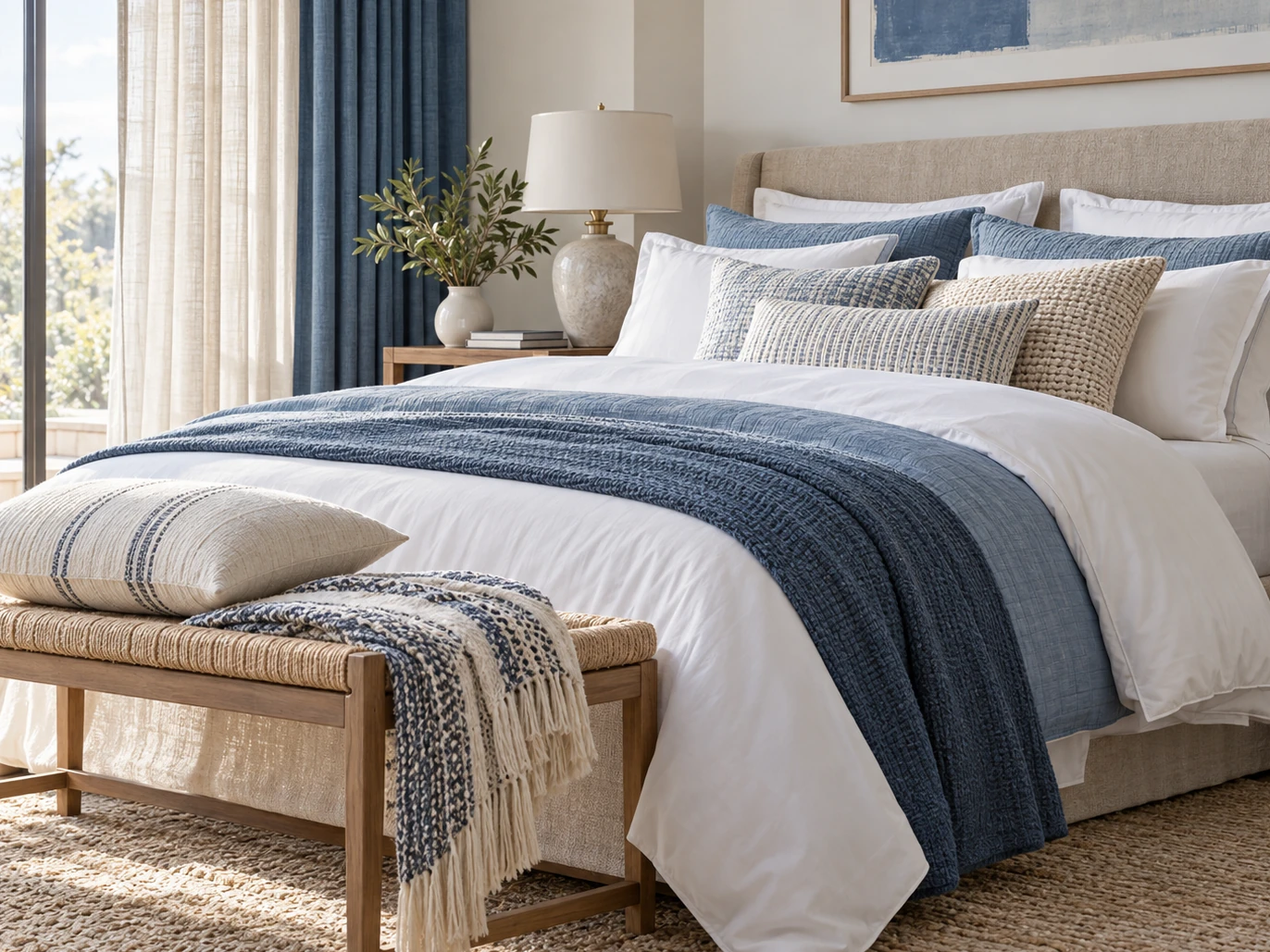
Discuss envelope or zip closures for duvet covers and pillowcases, fitted-sheet elastic, seam construction, hem width, embroidery, packaging and care-label requirements. An attractive showroom photograph does not replace a dimensional specification.
| Product | Specify | Buyer consideration |
|---|---|---|
| Flat and fitted sheets | Finished width/length; fitted depth and elastic | Market sizing, mattress fit and post-wash change |
| Duvet and quilt covers | Finished dimensions; opening and closure | Insert compatibility, seam strength and finishing |
| Pillowcases | Finished width/length; closure and flap | Fit, hem quality and visual consistency |
| Coordinated bedding sets | Individual piece dimensions and pack contents | Colour, artwork, component consistency |
Evaluate laundering, appearance and consistency
Use labelled, representative samples and a common evaluation sheet. Inspect colour, fabric surface, hand feel, transparency, stitching and finished dimensions before laundering; repeat the same checks after an agreed washing and drying sequence.
AATCC TM135 describes methods for measuring dimensional change in fabrics after home laundering. Buyers should specify the relevant test, condition and acceptance limit before ordering rather than assume that any fabric automatically meets a threshold. Hospitality buyers may need to discuss their actual laundry process separately.
- Document pre- and post-wash finished dimensions.
- Inspect seam integrity, pilling or surface changes where relevant.
- Agree shade, appearance and dimensional tolerances in writing.
- Retain an approved reference sample and specification revision.
Responsible material choices without vague claims
Where buyers prefer natural-fibre or lower-impact options, request the fibre composition and supporting documents relevant to that claim. Natural does not automatically mean certified organic or environmentally preferable in every respect.
A good sourcing discussion also considers use life, laundering needs, sensible packaging and avoiding unnecessary material loss through clearer specifications and sample approval. These are purchasing considerations, not evidence that a particular Zircon product has achieved a measured environmental result.
The bedding sourcing brief: what to send
For an actionable inquiry, provide the market and application first—such as retail bedding, hospitality bed linen or a coordinated designer home collection. Then share fixed requirements and mark open questions clearly so suitable options can be discussed.
- Products: fitted/flat sheets, pillowcases, duvet covers or coordinated sets.
- Fibre composition, target weave and preferred hand feel.
- Finished sizes, tolerances, fabric weight and any thread-count method.
- Colours, artwork, woven or printed patterns and finishing.
- Care conditions, sample-testing requirements and documentation.
- Order volume, packing format, delivery market and target timeline.
Select bedding fabric by its composition, weave, finish, fit and verified sample performance—not by thread count or an environmental adjective alone.
QUICK ANSWERS
Frequently asked questions
Is percale a fibre or a weave?
Percale is generally a plain-weave construction, not a fibre. Cotton is a fibre. A full bedding specification can state both.
Does sateen always mean synthetic fabric?
No. Sateen refers to a woven construction and can be produced using cotton. Always request the stated fibre composition.
Are higher thread-count sheets always better?
No. Thread count is only one construction measure. Yarn, composition, weave, finish and test results also matter.
Can we request woven designs and coordinated bed linen?
Describe the required dobby or jacquard effect, print or embroidery, colours and sizing. Availability and sampling should be confirmed directly for each proposed specification.
What tests should international bedding buyers request?
Agree the relevant end-use tests and acceptance limits before production. Dimensional change after laundering is one possible check; additional tests depend on the buyer’s market and application.
Further reading & standards
Independent technical references relevant to the topics covered. Standards may require paid access; their inclusion is not a certification claim.